Transforming a Critical Government Resource for the Digital Era
The Mission
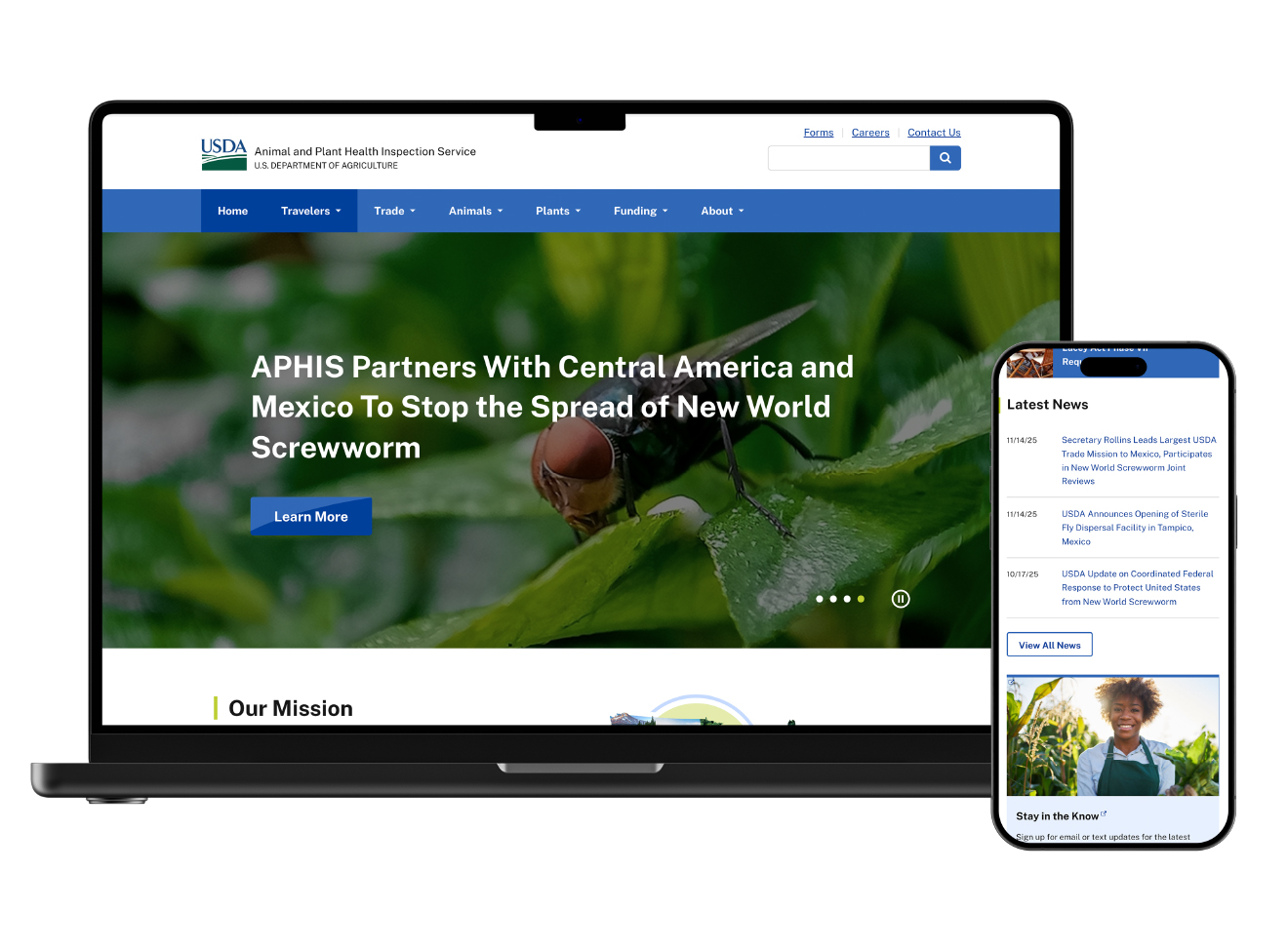
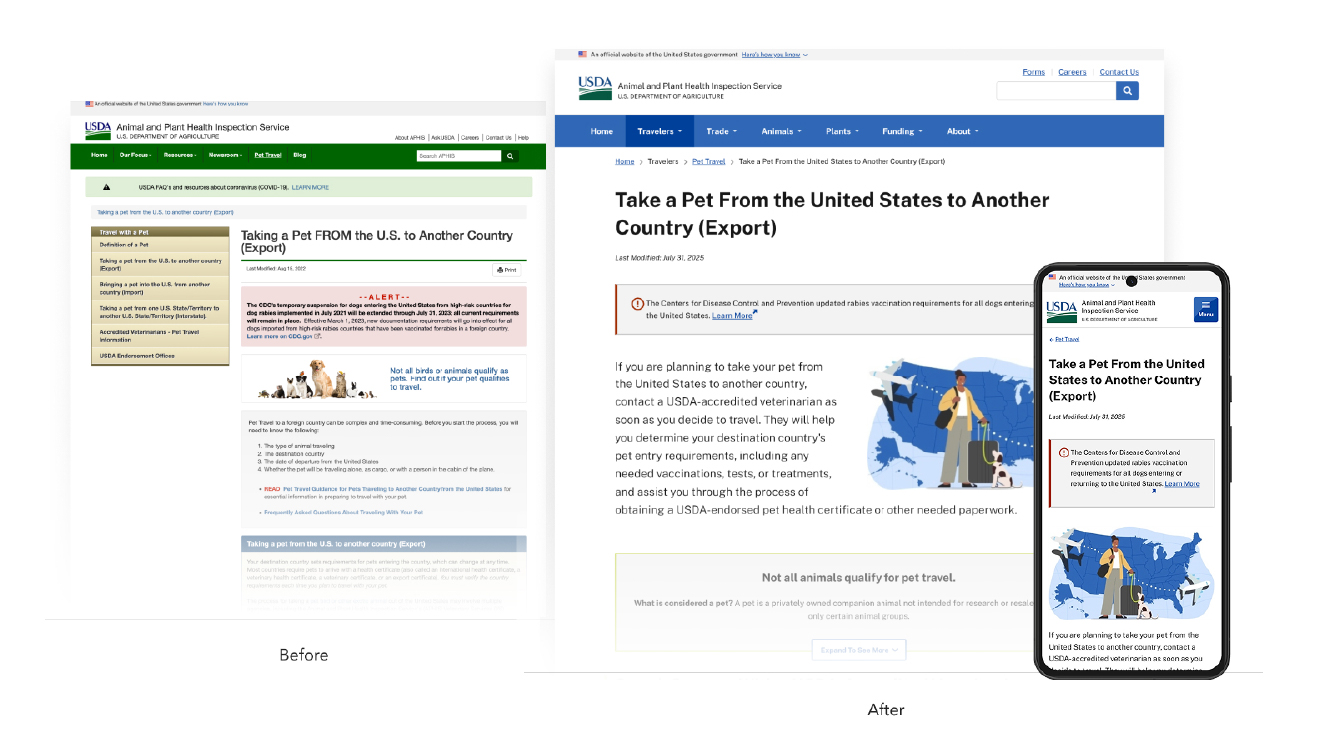
The U.S. Department of Agriculture (USDA) Animal and Plant Health Inspection Service (APHIS) faced a significant digital challenge. Its website—housing critical regulatory information, permit applications, and certification processes for diverse stakeholders—had grown unwieldy. Users struggled to find information, content was often outdated, and the user experience wasn’t optimized for mobile devices.
APHIS partnered with Reingold and CMRIgnite to transform its website into a modern, accessible platform that would simplify government interactions. APHIS also needed the team to maintain business continuity throughout the transition.
A User-Centered Foundation
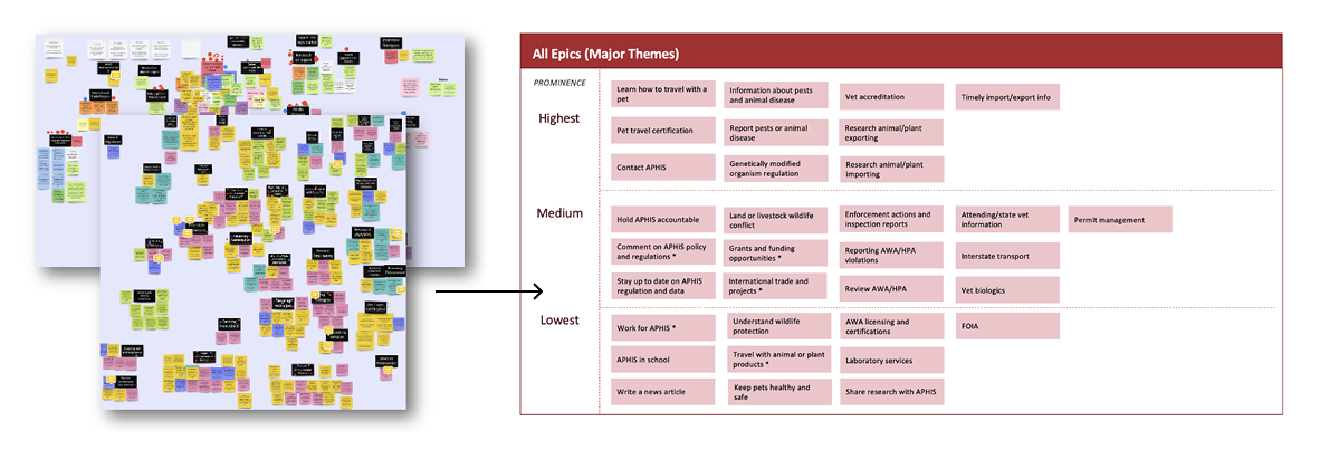
To transform APHIS’ digital presence, we began with user-centered research and discovery. Our team gathered insights about APHIS audiences and how the website could support their needs. We conducted stakeholder interviews, audited over 6,500 webpages, and reviewed analytics and internal site search terms to understand users’ most common tasks and behaviors. Through this assessment, we developed 12 user personas and journey maps, which then guided our design strategy.
Bringing the Vision to Life
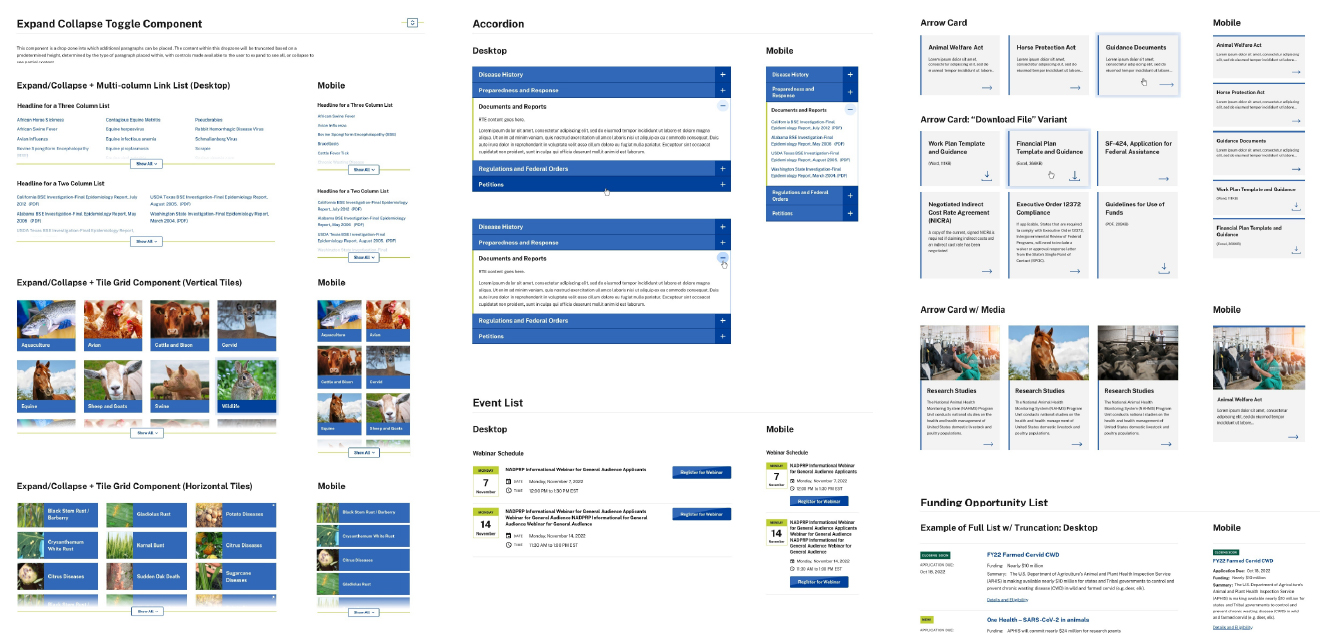
Working closely with APHIS stakeholders, we developed and rigorously tested a new site map and created wireframes to visualize the new content hierarchy and page layouts. Finally, we created a modular design system, based on the United States Web Design System (USWDS), and migrated APHIS’ content from SharePoint to Drupal.
The Results
The newly redesigned APHIS website launched in April 2024 and received approximately 1.6 million visits within its first three months. The transformation delivered immediate, tangible benefits to users:
- Improved navigation that reduced the common frustrations identified during user research.
- A responsive, mobile-optimized experience.
- A cohesive design that ensures consistency and accessibility throughout the site.
The redesigned website is a powerful platform where APHIS users can easily access crucial regulatory information, obtain required permits and certifications, and stay updated on policy developments—all with a user experience that prioritizes their needs and ways of working.

MoneySKILL in the Classroom
AMERICAN FINANCIAL SERVICES ASSOCIATION EDUCATION FOUNDATION